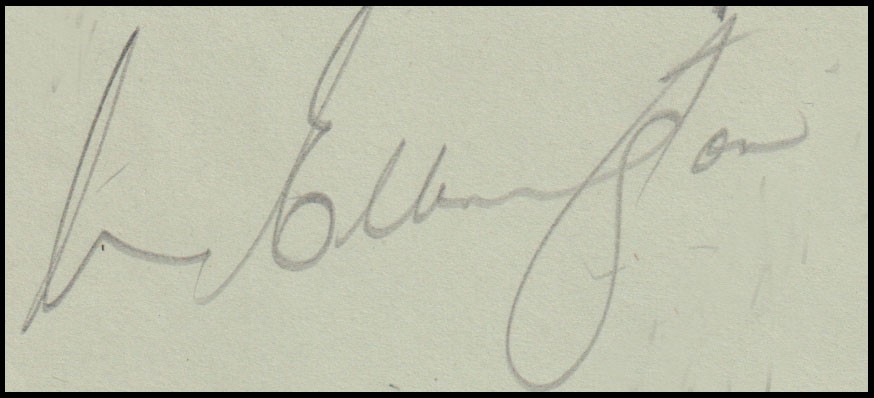
30 Jun 1923
Southampton
died: Southampton 4 Apr 2015
238
1945 — 1956
11

Southampton-born Bill Ellerington spent more than 40 years at his home-town club. His Sunderland-born father (Bill Ellerington snr) had come south, during the First World War, to work at Harland & Woolf and play war-time football for Saints. He had remained in Southampton, where Bill started school in Sholing, but had returned home in time for Bill to play some schoolboy football there, to captain England Schools (see above) and to be on the books at Roker Park as a 15 year-old. When the family came back to Southampton in 1940, Bill was still registered, as an amateur, with Sunderland, but was soon guesting for the Saints. Then, after serving in the RAF, he signed, full-time, in 1945.

Having featured at right-back in most of the FA Cup matches played in the transitional season of 1945-46, he was a regular in that position when League football resumed the following season – until January, that is. The fateful watershed came as the side prepared for their FA Cup Fourth Round tie at Newcastle. When they got dressed for golf (see above), all of the players wore their heavy jerseys, save for Bill, who was open-necked. He went down with pleurisy. Alf Ramsey was summoned north to play and he remained ever-present, in one full-back position or the other, until January 1949. His performances were good enough not only to sideline Ellerington, but to win him an England cap in December 1948. The different versions as to why Ramsey then lost his place are discussed in his profile. Suffice it say that Ellerington now seized his chance and played so well as to be capped twice on England’s continental tour of May 1949. Yes, competing right-backs at a Second Division club, both capped in the same season or so. There has been fun to be had, inviting their sometime team-mates to discuss the respective merits of Ellerington and Ramsey. Even Ted Ballard, who preferred Alf’s “all-round” game, thought Bill to be
“one of the best kickers of the ball I have ever seen.”
In the very week of Bill’s international debut in Oslo, a disgruntled Ramsey was transferred to Tottenham, feeling slighted by manager Bill Dodgin, who had pointedly told reporters that Ellerington “never moaned once, all the time he was in the Reserves.” With Alf gone, the No.2 shirt was Bill’s to surrender –which he finally did in 1955-56, after his long-time team-mate, Ted Bates, had taken over as manager. Duly appointed player-coach, Bill played on for the “A” team. That he continued to consider himself a player is demonstrated in line-ups: right through to the 1958-59 team-photo, he appears not in his coach’s tracksuit, but stripped to play. In interviews with Bill’s “A”-team charges, he emerges as a much-admired model, most especially as to how to kick the ball – shades of Ballard’s assessment, already mentioned.
Thus, Terry Simpson describes Bill’s kicking as “the finest. No effort. Beautiful. Like a golf swing.” For Simpson, only Bobby Charlton has ever matched Bill in that regard. Bill’s first task, off the field, was to help Bates scour the lists of players available for transfer, hoping for bargain-buys. And then he had to go looking at potential bargains. It is not contested that both Cliff Huxford and George O’Brien were his recommendations. His role in the signing of Mick Channon is more complicated, for reasons explained in his profile, and Bill has declined to take the credit for it that he has so often been accorded: “Nobody finds a player,” he disarmingly told Tim Manns. “Anyone who claims to have discovered a player is lying, because all the scouts talk to each other.” Terry Paine admired Bill’s judgment so much that, after moving to Hereford in 1974 as player-coach, he would seek his advice on players who might hack it in the Third, and later Second, Division. Hereford’s manager,
John Sillett, “respected Bill as much as any scout I’ve ever met. An excellent judge – hard to please!”
By then, Bill had been moved by Lawrie McMenemy from his coaching role into scouting. He assisted Ted Bates in 1976, in spying on FA Cup opponents, especially Manchester United in the run-up to the Final – a mission described by Channon, in his 1977 autobiography, as “the greatest piece of tactical scouting I have ever known.” A tracksuited Ellerington duly joined the coaches at Wembley and even featured, albeit half-hidden in the background, in a celebratory photo or two. But his unassuming, unassertive style was not up McMenemy’s street and he was relieved of his duties – to his lasting chagrin – in the manager’s 1980 reshuffle. Aged 57, he would never work in the game again. He would stay in touch with it, though, in his own modest way, attending various functions and ceremonies on the express condition that he not be asked to speak. A most generous host to the Saints historians at his Highfield Lane home, he forever afforded them access to his vast collection of photos and memorabilia, while being ever willing to proffer intelligent analysis – with his wife, Rosalind, chipping in, should his impressive memory fail him. When Ted Bates’s memory had succumbed to Alzheimer’s, Bill was a regular visitor, reminiscing about how they’d got by, about “who we got and who we didn’t get.” Ted properly stands alone, as a statue on the St Mary’s forecourt.
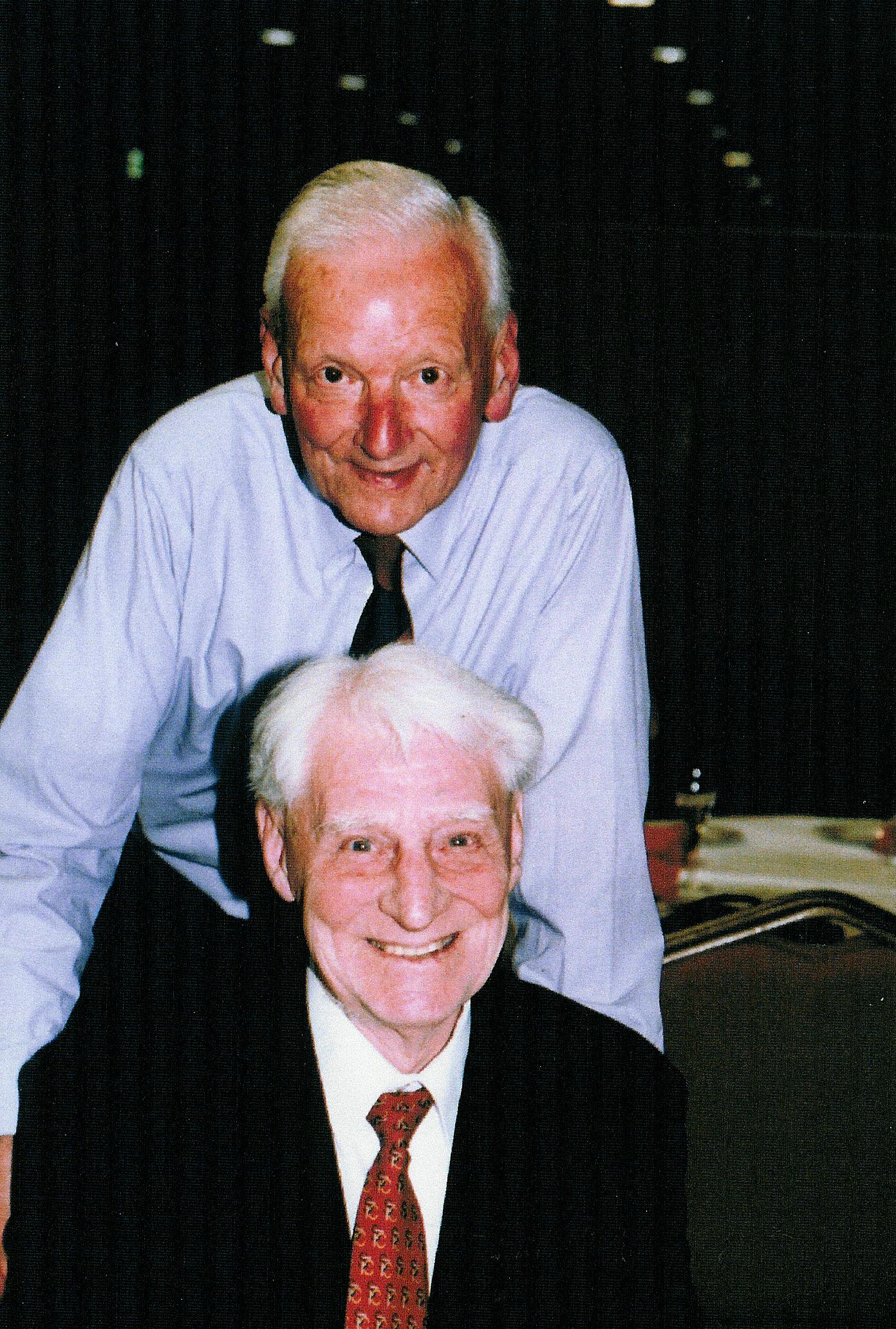
But supposing that the fashion had been not for individual statues but for important pairings, then there would rightfully have been a statue of Ted, with Bill alongside – or, more probably, peeping modestly over the boss’s shoulder.
Please check the following profiles for further images.
Bill Dodgin Bill Stroud Roy Williams Ken Wilkins Peter Vine Tom Rudkin Bill Rochford Jack McDonald Arthur Dominy Fred Kiernan Tom Lowder Stan Clements- Barnes Sch
- Sunderland Tech Sch
- Fatfield Juns
- Sunderland am Oct 1938
- SOUTHAMPTON during WW2
- SOUTHAMPTON Sep 1945, player-coach 1956, res trainer 1968, scout 1973
| Competition | Apps | Goals |
|---|---|---|
| FOOTBALL LEAGUE | 225 | 10 |
| FA CUP | 13 | 1 |
| Total | 238 | 11 |