14 Jul 1881
Alverstoke
died: Salisbury 14 Jan 1971
1
1901 — 1902
0
It was no surprise when Peter Desbrow, aged 14, enlisted as a boy soldier into the RGA Western Division Nos 1 Depot, for he came from a family steeped in the tradition of serving the British Army. His father had been in the Royal Artillery for 21 years, 15 years of which were spent in India, while one uncle fought in Afghanistan in 1879, during 20 years service and another participated in the Zulu and Boer Wars. Peter mustered as a Gunner in 1899 and by April 1901 he had made the rank of Corporal.
Five months later he was invited to The Dell for a trial in a Western League match, playing at full-back, but perhaps overawed the local press thought his performance to be “weak”. The chances are he had come to the attention of the Saints scouts while playing for the R.A and something of an all-round sportsman he was also good enough to play first-class cricket for them as well.
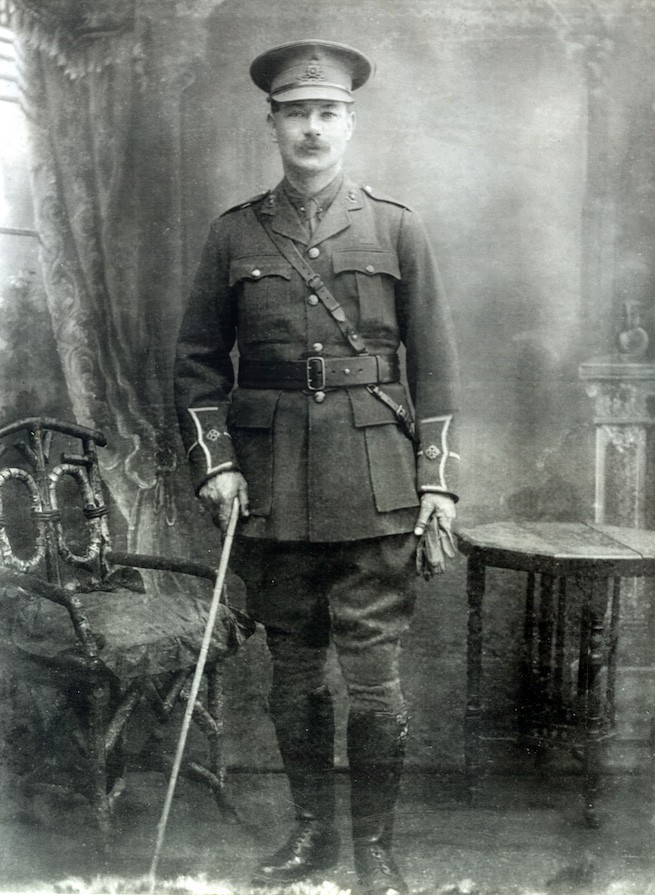
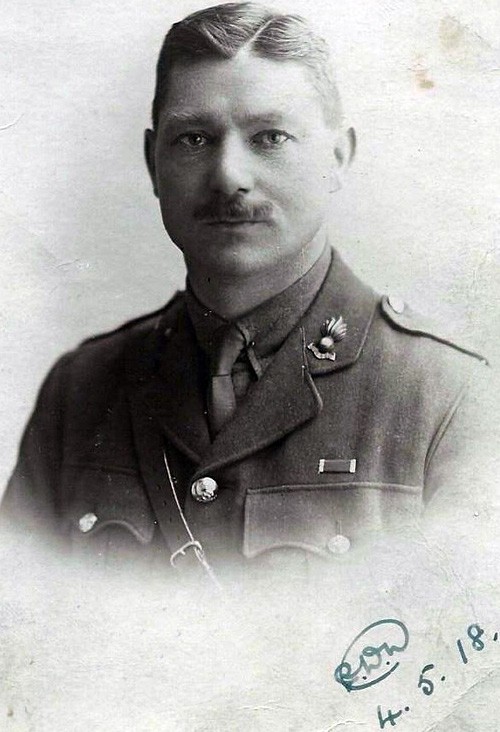
By the time the Great War had broken out he had married a Portsmouth girl and they had had three children, all born in the town. Now a 2nd Lieutenant he was posted to Boulogne with the 39 Siege Battery in 1915 and was heavily involved in the hostilities from there on in to such an extent that by the time the Armistice was signed he had become a Captain and been awarded the M.C. His Battery had supported the Canadians in the last 100 days of fighting and it was for his endeavours here that the medal was awarded (probably for his service with the Canadian 8th Infantry Brigade at Orange Hill).
In 1920 he was posted to Southern Ireland as a plain clothes intelligence officer following which he became a Courts Martial Officer presiding over several high profile Courts of Enquiries held at Waterford Barracks. When he reached compulsory retirement age in 1926 he wrote to the MOD asking to be kept on as a Quartermaster. His commanding officer wrote in a supporting letter –
“I very strongly recommend that something be done for this officer. Captain Desbrow is about the best ranker officer that I have met in the Regiment, and I have met some fifty or sixty in the last two years”.
Despite this glowing reference, he was turned down and reluctantly leaving the Army with the rank of Major he became, in 1932, an Experimental Stores Officer at the Chemical Defence Station at Porton and was still there when WW2 was declared. In his retirement he lived in Alderbury and was known by everyone there simply as “the Major”.
He had maintained his interest in football and sport throughout his Army career and in 1924 the Portsmouth Evening News reported that he had become the Hon. Secretary of the United Services Recreation Ground and and in 1927 he was elected Vice-President of the Portsmouth FA.
- Royal Artillery (Portsmouth)
- SOUTHAMPTON trial Sep 1901
| Competition | Apps | Goals |
|---|---|---|
| WESTERN LEAGUE | 1 | 0 |
| Total | 1 | 0 |