

14 Feb 1951
Armthorpe, Scunthorpe
died: 20 Jul 2026
80
1980 — 1982
42
But then, in common with so many of his Liverpool team-mates,
Kevin Keegan never liked coming to The Dell. It was so confined, he explained, that, “if you were going down the wing and Denis Hollywood didn’t get you, an old lady would reach over the wall with her umbrella and trip you up.”
By the time Lawrie McMenemy persuaded Kevin to sign for the Saints in 1980, Denis had long retired. And although the ground still had that claustrophobic feel that could intimidate visitors, not only from Liverpool, bench-seats had been installed down the left-flank of both touch-lines. Which meant that brolly-brandishing ladies remained a threat to visitors playing wide-right, but when the 1980-81 season kicked off, there was a new intimidating force at The Dell: the former European Footballer-of–the-Year, twice over. McMenemy’s acquisition of that European star from Hamburg was, by any reckoning, a coup. And the manager’s mere announcement of Keegan’s coming – five months before he formally signed and six months before he kicked a ball in earnest – was a spectacular, stage-managed show.
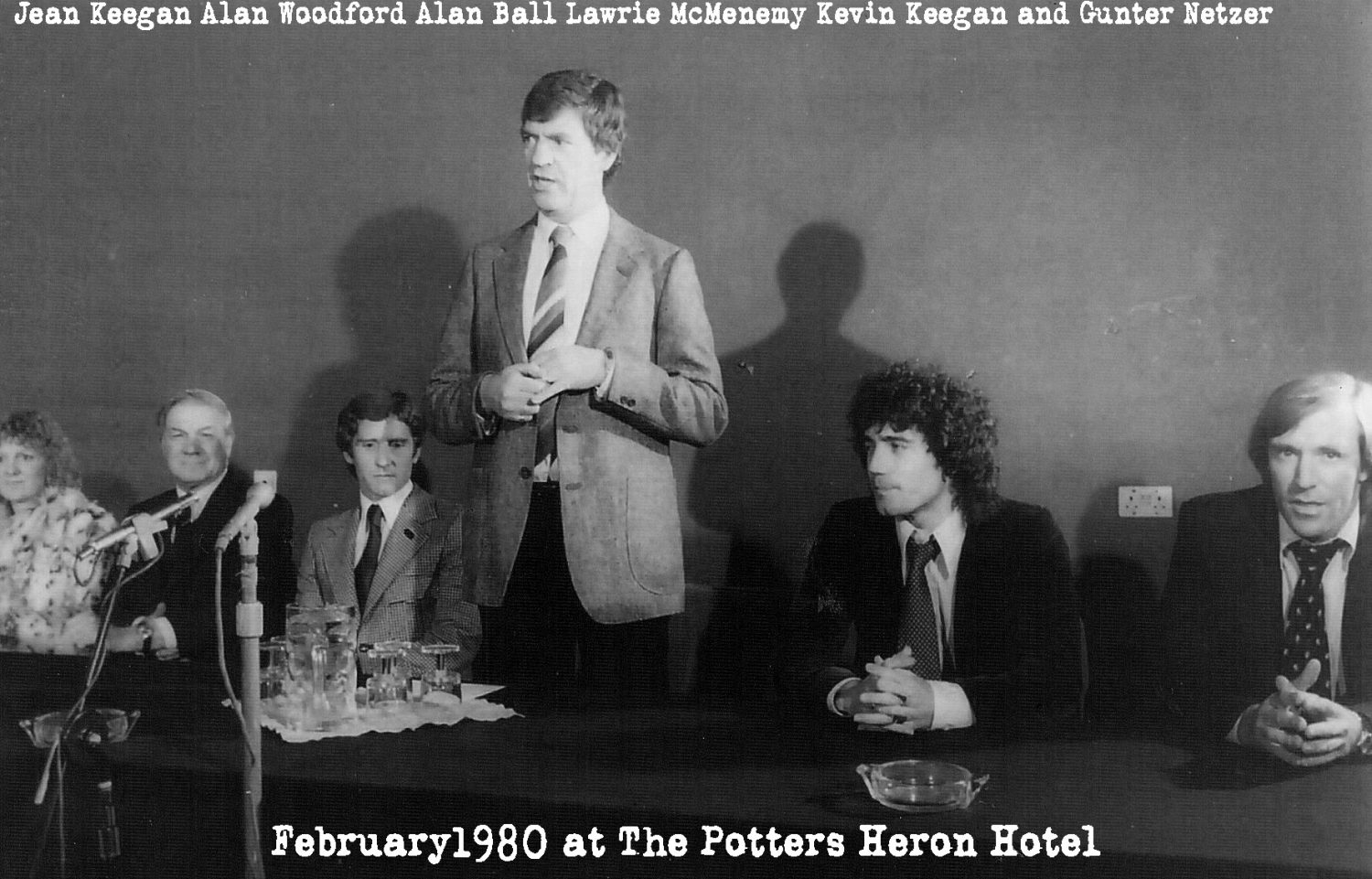
The club captain, Alan Ball, invited by McMenemy to join him for a press conference in February 1980, at the Potters Heron hotel, suspected that he was being set up for an appearance on This is your Life.
But then, to gasps all round, Kevin Keegan walked in, to be introduced as the man who would be signing for Southampton, come July. It was truly one of those where-were-you-when-you-heard moments.
Could Southampton really be buying one of the continent’s leading superstars, still aged only 28, famous perm and all? Hampshire was buzzing – and so were the ’phone-lines to McMenemy’s PA, who fielded calls from “estate agents by the hundred,” anxious to help the Keegans find a suitable home in the county. And he’d not even signed yet although when he did the following year’s balance sheet revealed he was on £80,000 a season, £20,000 more than McMenemy himself. Season-ticket prices were duly increased. The tickets sold. Now the fans had to wait until August, not only to see Keegan but to discover who would make way for him.
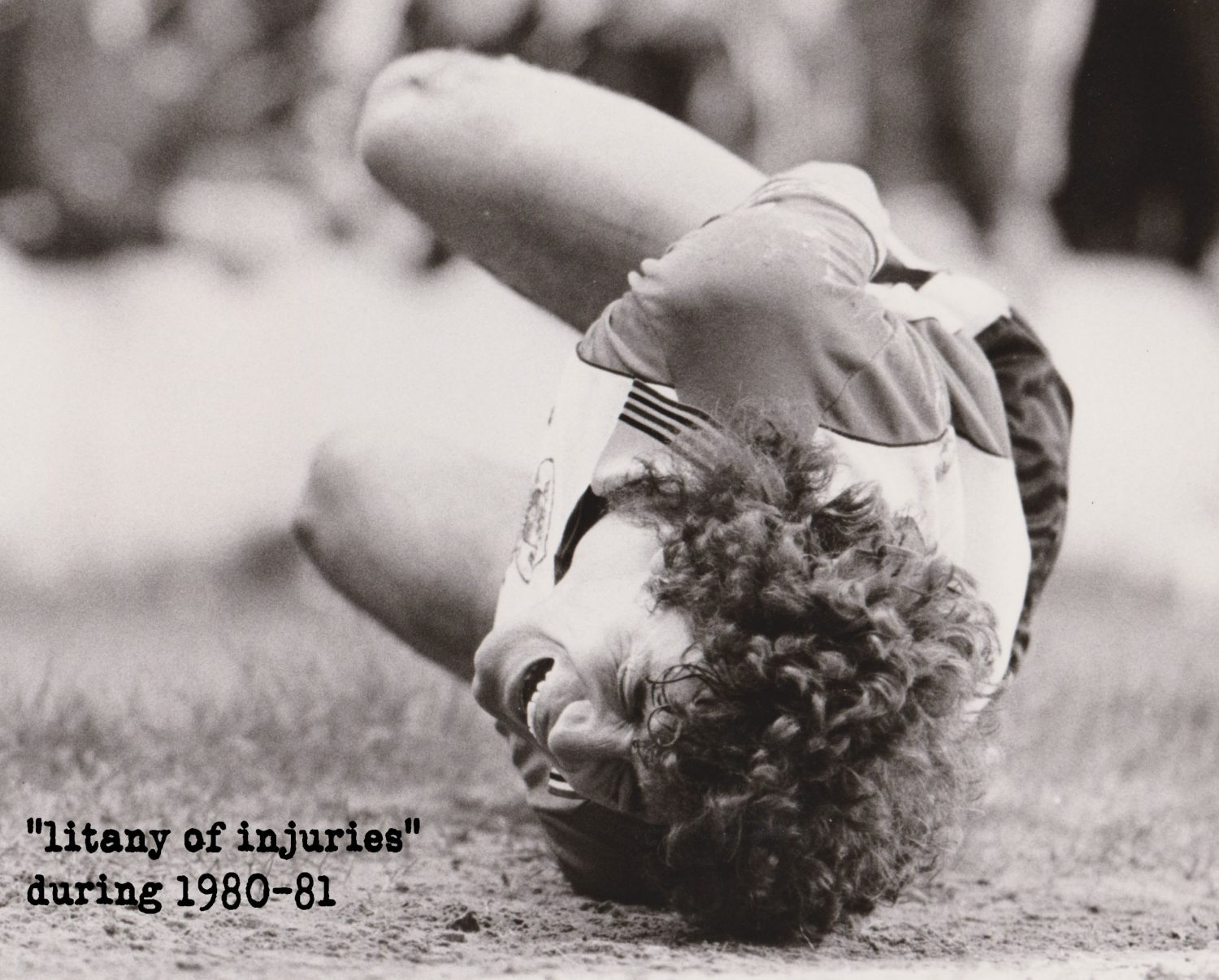
It was the previous season’s top scorer in the First Division, Phil Boyer. Seldom injured at Anfield, Keegan would have a litany of injuries in 1980-81, limiting him to 27 League starts. Even so, he outscored the ever-present Mick Channon, as the Saints achieved a highest-ever finish of sixth and qualification for Europe.
The next season was even better, with Kevin missing only League game, as the side topped the table for longer than anyone else – from 30 January to 20 March – before they faltered. They had held on so long, despite a season-ending injury to Steve Moran in January.
Kevin was one of the senior players urging McMenemy to buy a replacement and perhaps engage in more “major team surgery”, as he put it his autobiography, perhaps starting with a commanding goalkeeper. But the cupboard was bare and
Keegan came to accept that maybe his “ambitions exceeded what the club could afford.”
A home defeat by Aston Villa, in early April, started a miserable run-in of P8 W2 D1 L5 – and a slide to seventh place. After that Villa match, the manager’s furious attributions of blame included calling Kevin a “cheat”. That was it. Keegan, the division’s top scorer and PFA Player-of-the-Year, was now determined to leave. In the time it took to negotiate his move to Second Division Newcastle, season-tickets were selling well and there were suggestions that his departure had been deliberately hushed up. His offers to refute such accusations, by holding a press conference or taking out an ad’, were declined.
So, having come with a resounding bang, he left with a muted whimper.
In his second season with Newcastle, they won promotion. Whereupon, the superstar, capped 63 times by England, for whom he had been made captain by Don Revie, stopped playing. Not the most technically-gifted player to have pulled a red-and-white shirt over his head, he has cheekily referred to his Southampton days as “a manufactured player,” performing for a “manufactured manager”. Having retired to Spain, he returned to Newcastle in 1992, to launch a colourful managerial career that became, at times, more like a soap opera. A passionate man, who wears his heart on his sleeve, his resignations remained as unpredictable as his departure from Southampton. But it will be that dramatic announcement of his imminent arrival that remains a major memory. McMenemy himself described Keegan’s coming as “the greatest day in Southampton’s history” – even bigger than winning the FA Cup, because it “represents progress.” That progress may have faltered because Kevin’s ambitions exceeded Southampton’s coffers, but the way in which his inspirational performances for Southampton exceeded his “manufactured” skill-set will surely be remembered as worthy of McMenemy’s coup.
- St Peters Sch
- Pegler Brassworks
- Enfield House YC
- Lonsdale Hotel
- Coventry C trial 1967
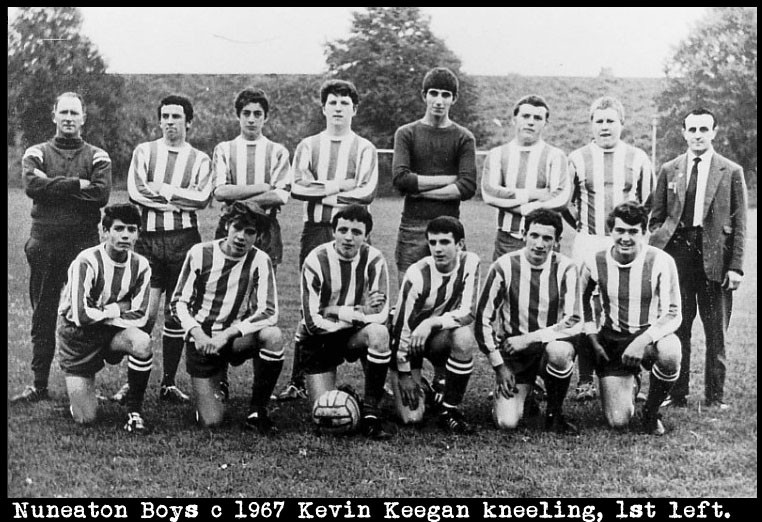
- Nuneaton Boys 1967
- Scunthorpe Utd app Jan 1967, pro Dec 1968
- Liverpool May 1971
- Hamburg Jun 1977
- SOUTHAMPTON Jul 1980
- Newcastle Utd Aug 1982, mgr Feb 1992
- Fulham mgr May 1998
- England mgr Feb 1999
- Manchester C mgr May 2001
- Newcastle Utd mgr Jan 2008
| Competition | Apps | Sub | Goals |
|---|---|---|---|
| FOOTBALL LEAGUE | 68 | 0 | 37 |
| FA CUP | 5 | 0 | 2 |
| LEAGUE CUP | 3 | 0 | 1 |
| EUROPE | 4 | 0 | 2 |
| Total | 80 | 0 | 42 |

