28 Mar 1873
Dalry, Ayrshire
12
1896 — 1897
0
Where to start the story of John McKie? He was only two days old when he was baptised ‘John McCoy’ which raises the first question about him.
Why – by the time of his introduction to the supporters of Southampton St Mary’s 23 years later – he had assumed a different name? That is unclear but much about John’s life is clouded in mystery and ultimately tragedy.
He had been born in 28 March 1873, at Dalry in Ayrshire and when aged 16 had, while working in a pit, been kicked in the forehead by a horse, an accident that 17 years later may have saved him from the gallows. John enlisted in June 1893 at Leith Fort and then in the September he was posted to 15th Company, Royal Artillery based at Fareham. He quickly got into their Company football team, initially as a forward. In fact in the December that year he found himself playing (and losing) against St Mary’s in the Portsmouth Cup and according to the Southampton Observer, the RA were at one stage “urged on by half a dozen of their officers who stood on the rails and seemed ‘sweet’ on the forward McKee (sic), by the way they urged ‘Mac’ to play up.
While his footballing prowess made him popular with his regiment, like many young soldiers of the day he got into quite a lot of trouble, with the bottle and the fairer sex being the problems. He was charged with being “drunk and disorderly” soon after his arrival, but not before he had spent 21 days in Gosport Hospital being treated for mild gonorrhoea.
He then was put on trial for misconduct but then went AWOL leading to a charge of desertion. He was sentenced to spend a year in military prison but that was reduced to 26 days and then, not surprisingly, on the 22nd December 1894 he was discharged.
However there was one silver-lined cloud on the horizon.
While in the army. John, now a right-back, had been good enough to win county honours for Hampshire (see Fred Hayter profile for further photo). The Royal Artillery were among the top dogs in local and amateur football circles and frequently played fixtures against teams from the Southampton area, particularly forging special links with Freemantle to whom they often loaned players, which explains why, some nine months after leaving the Army in disgrace, John found himself on the books of the ‘Magpies’ and groundsman at their Shirley Ground. He also was given extra employment by a T.J. Dukes, a Freemantle builder.
Freemantle were then St Mary’s main rivals in the struggle to become Southampton’s premier football club. John had an excellent season for the Magpies, virtually ever-present he particularly shone when the two clubs met in an English Cup fixture in October 1895.
His performance on the day was described in the Southampton Times as “quite brilliant”
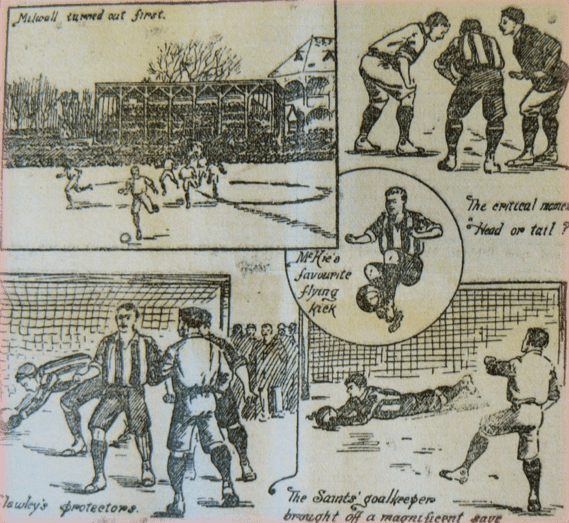
despite Freemantle being vanquished 5-1. St Marys were now going from strength to strength and the following season prised John away from the ailing Freemantle with an offer of a, far from paltry £3 a week. He duly made his first team bow v Chatham in the Southern League on September 19th 1896 and also played in six of the seven FA Cup-ties that season as Saints reached the 2nd Round proper before going out to Newton Heath as Manchester United were then known.
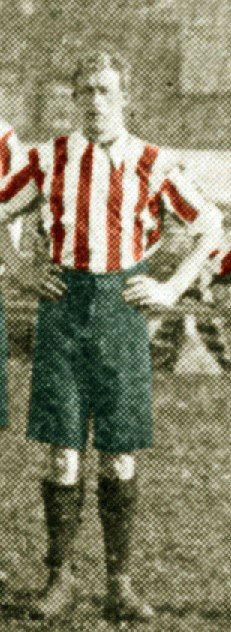
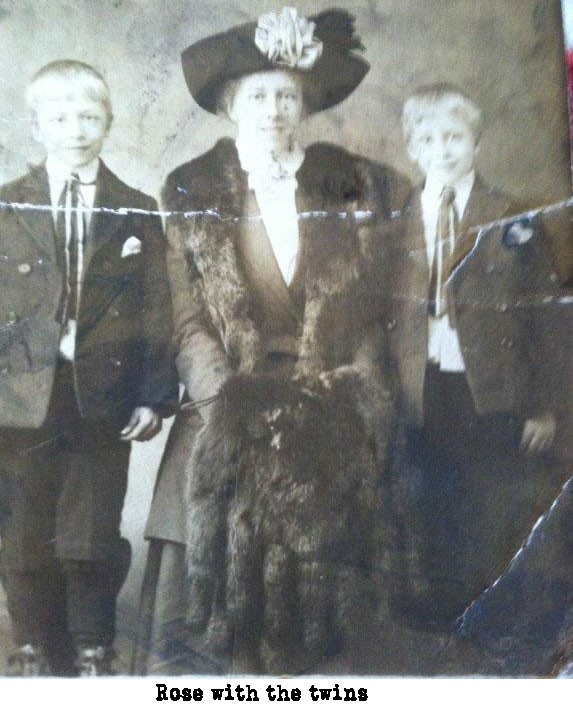
There were signs at Southampton however that he could be an aggressive sort, during a cup-tie against Heanor in February 1897 McKie, it was reported, had broken a forward called Hardy’s leg in a collision. A fortnight later in a letter to the Echo, John had taken the unusual step of explaining that it wasn’t him involved and that it had been another Saints player, John Hodgkinson. Despite this incident, life was looking up and it is around this stage he met Mary Byrne (or Rose as she was known), four years his junior who came from the same St Mary’s district where the team were based.
Rose – the daughter of a John Byrne, a superintendent at the Ordnance Survey offices – was described some 10 years later as being “tall and graceful in her movements, quiet in her demeanour and nice looking”. It was also observed at the time, perhaps tellingly, that “the prevailing opinion is that she was socially of a much higher class than her husband”.
Whatever the difference in social status, the pair were thought to have married in Fulham, just down the road from one of John’s subsequent clubs, in 1899. Apart from the birth of the four boys (see scrapbook section) and the fact that John’s post Southampton career took him to Fulham, Chatham, Cowes, Dartford and Salisbury, before ending up back at Freemantle, late in 1901, not much is known on how the partnership evolved, although later it was said “the couple seem to have lived more or less unhappily for some time”.
In December 1905, John his football days behind him returned to Scotland after an absence of 11 years, initially settling in Paisley with Rose and Adrian in tow (the twins were staying with his sisters in Dalry while the eldest, Alex remained in Southampton). The following September, John found work in a pit close to his father’s, who duly invited John, his daughter-in-law and young grandson to move in with him. The 57-year old Francis McCoy whose wife Jane (née) McKinlay died in 1889, had lived in 243 Front Row, Cronberry, a small terraced two bedroomed mining cottage for nearly 20 years, but according to the Echo, father and daughter-in-law hit it off right from the start with Francis “esteeming her very highly” and that “she had all the qualities that a woman could have and was too high for his son”.
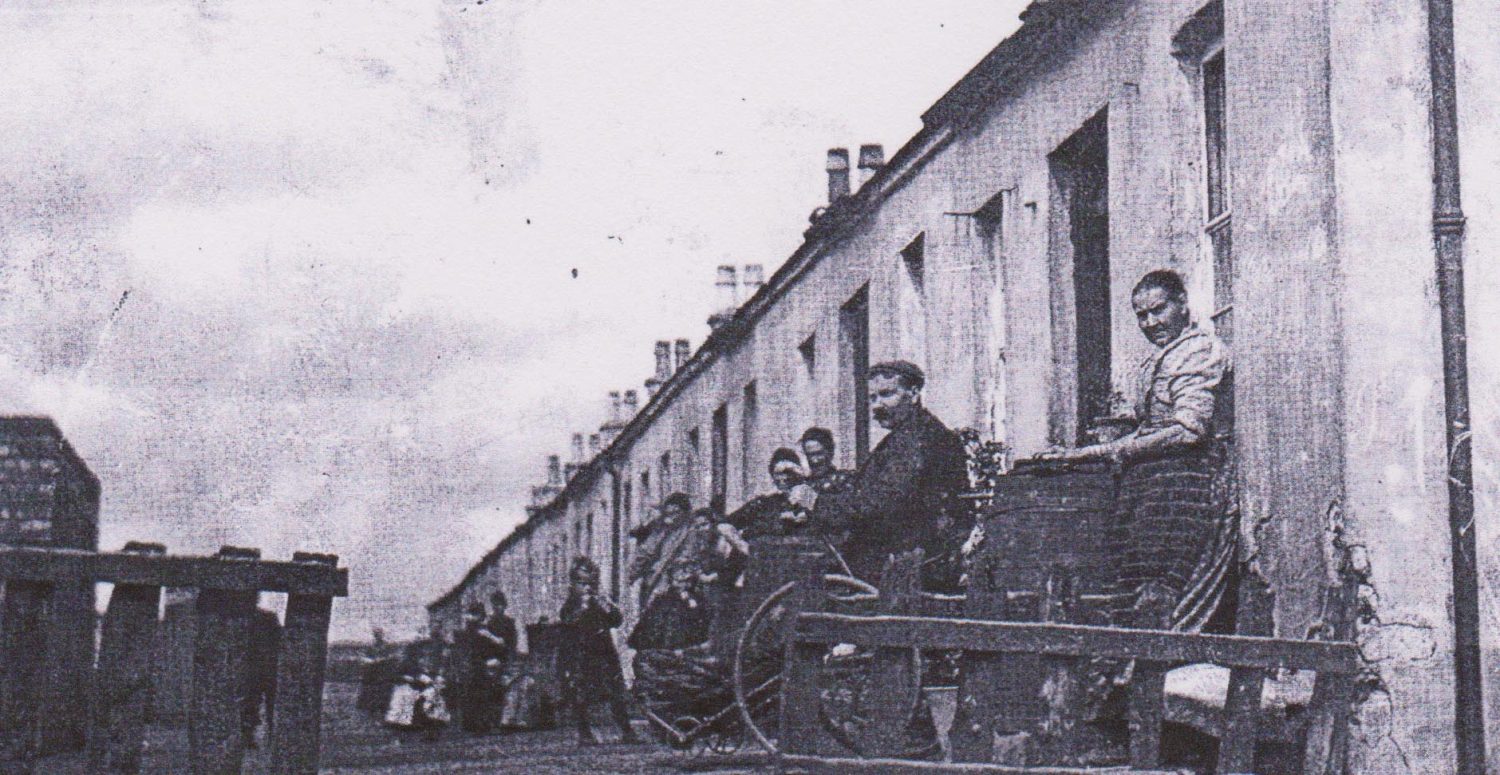
It was there in Cronberry, just six weeks later in the front bed room, just off the kitchen, where Rose had her throat cut while sleeping with the infant Adrian who was, “lying within her left arm” with “his hair matted and his little nightdress bespattered with the life’s blood of his mother”.
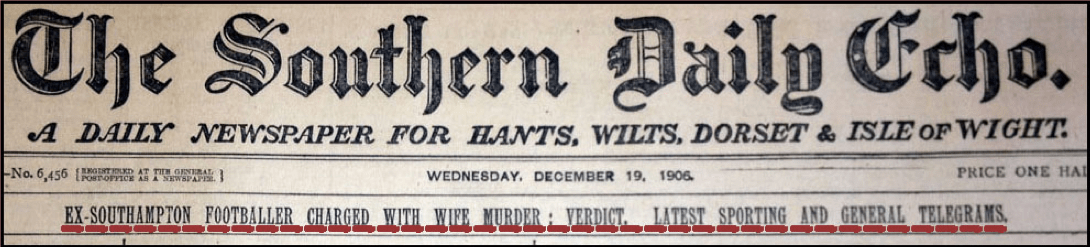
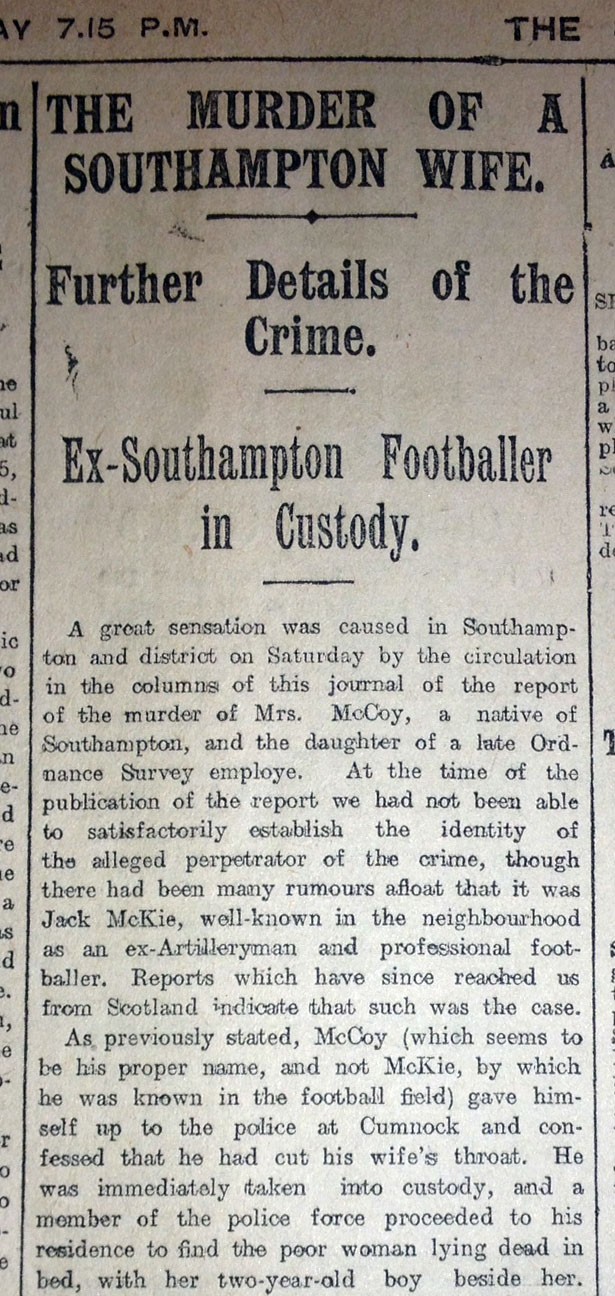
There were no signs of a struggle, but according to the case for the Crown during the trial “the razor must have been applied at least twice, and with great violence”. That same Tuesday morning, October the 23rd, 1906 John walked into Cumnock Police station in Ayrshire and according to the Cumnock Chronicle, “quietly” informed the on-duty Sergeant that he had “just cut his wife’s throat and he had called to give himself up”.
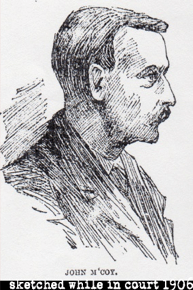
What had driven John McCoy to such a desperate act? Unfortunately he chose not to take the stand during his trial, his defence team instead stating “that at the time when the accused is alleged to have committed the crime charged against him he was insane, and was subject to and acted under the influence of a maniacal paroxysm and sudden uncontrollable insane impulse which deprived him of his senses”.
The prisoner, as he was referred to during the trial, was described as “a well set up man, with fair curly hair and a slight moustache”. Indeed the Southern Evening Echo – who were also reporting the story with great interest remembered him as being
a dashing defender, just over average height, lithe in build and with curly flaxen hair; he was the ‘beau ideal’ of a footballer.
Southern Evening Echo
Speaking in court on his behalf were his two brothers, Terence and Francis, his maternal aunt Sarah McKinlay and his father.
All of them spoke well of John and the affection he apparently had for his wife, but it seems since returning to Scotland, he had started drinking heavily and such were his moods that even his own father was fearful of him when drunk. Rose’s father-in-law who slept in the cottage’s other bedroom had risen and left for his work at the pit at 7am on the morning of the murder and testified that “he had spoken to the deceased before his departure, when she cried out to him, as she lay in bed, where some tobacco had been laid.” According to the Chronicle “it must have been shortly afterward that McCoy accomplished his fiendish work”.
One of the brothers also testified that ever since that kick on the head John had always been prone to rash behaviour – once sticking his hand into a fire on purpose and severely burning it and another time, when drunk, jumping through the local constable’s front window, a misdemeanour for which he was duly fined. A picture then of a tortured soul temporarily unbalanced by a massive sustained indulgence in alcohol, in the days leading up to the murder, a lack of any clear motive and the fact the case for the Crown did not produce sufficient medical evidence to “meet the special plea of the defence” was, just about, enough to spare John the hangman’s noose. After just 20 minutes the jury – following direction from the judge – returned with a verdict of culpable homicide and John McCoy, ex-Southampton and Hampshire County footballer was sentenced to ten years penal servitude.
We know from the 1911 census that he was serving this sentence in Peterhead Prison but despite the best efforts of everyone at Hagiology and his great grandaughter, Lisa who lives in the States, John’s fate is not known.
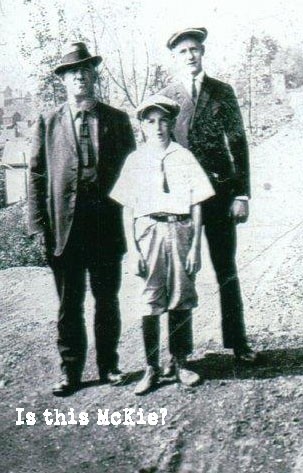
Once he had been released did he ever visit his children who had emigrated to Pennsylvania in 1909 with four of his sisters? That is one question amongst many the family would like to find out, but as things stand the best hope is in the 1921 census. There is a photo of one of the sons, Adrian, as a young man in the company of an unknown man who could well be John.
- 15th Company Royal Artillery 1893
- Freemantle Sep 1895
- Southampton St Mary's May 1896
- Chatham cs 1897
- Cowes May 1898
- Fulham Dec 1898
- Dartford Jun 1899
- Salisbury C Nov 1900
- Freemantle Oct 1901
| Competition | Apps | Goals |
|---|---|---|
| Southern League | 7 | 0 |
| FA Cup | 5 | 0 |
| Total | 12 | 0 |